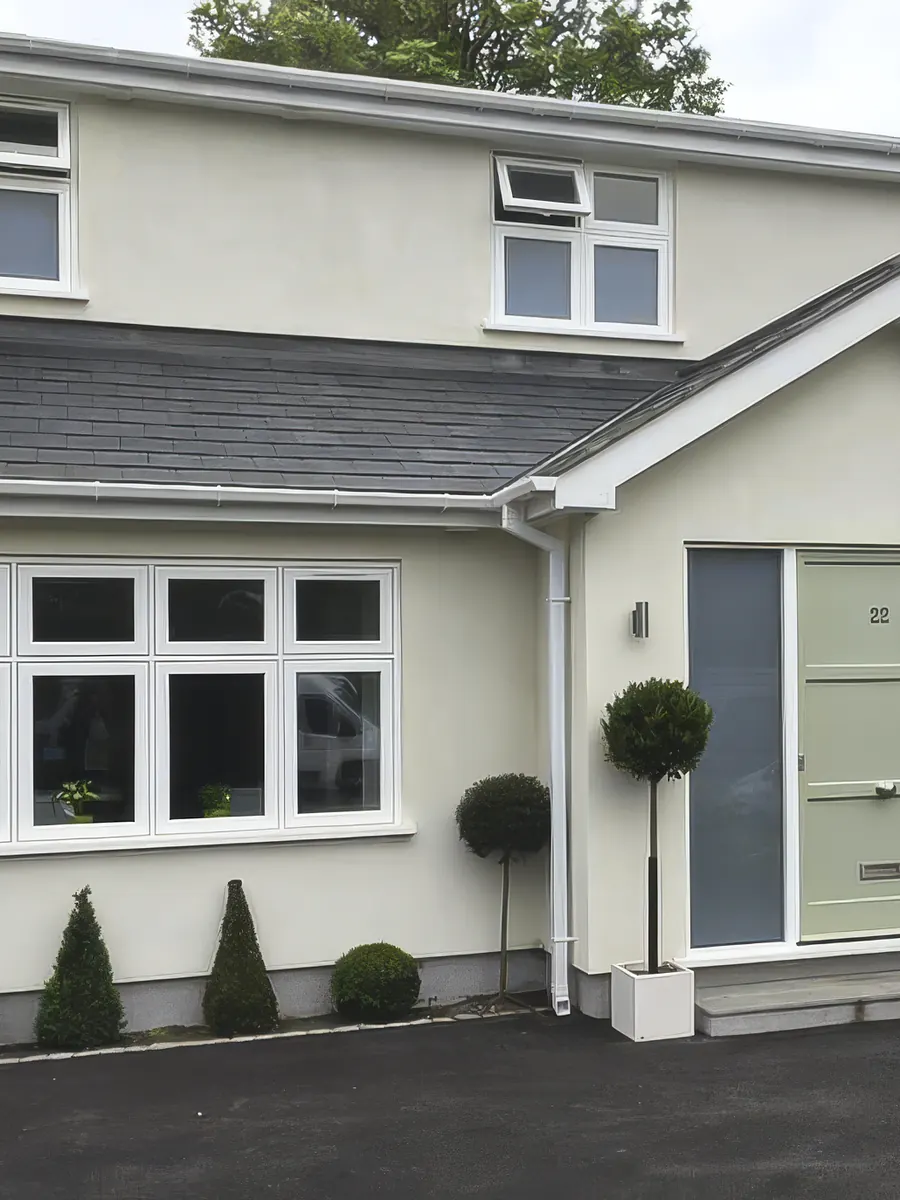
White timber windows and casements on a rendered house with a sage green front door

Timber tilt and turn windows

Inward-opening timber windows that tilt for ventilation and turn fully for cleaning, made to order and fitted by our own team across London.

01Timber windows

What is a timber tilt and turn window?

A timber tilt and turn window opens inward from one handle, tilted at the top for ventilation or turned fully into the room. It suits tall openings and upper floors, where cleaning from inside matters.

01

Tilt, then turn

One handle tilts the sash for ventilation or turns it fully inward for cleaning; multipoint locking secures both.
02

Dual-colour finish

An opaque heritage colour facing the street, a light translucent stain showing the grain inside.

03

Large single sashes

Perimeter hardware carries more weight than casement stays, and timber is stiff enough to need no steel reinforcement.

03Technical specification

Specification.

Every option is confirmed at survey, against your opening and your build stage.

Opening
Tilt for ventilation, turn fully inward
Style
The continental way of glazing
Locking
Multipoint
Material
Timber, made to order
Finish
Dual colour possible: heritage colour outside, stain inside
Sizes
Bespoke, made to order, confirmed at survey
Fitting
Supplied and fitted by our own installation team
Lead time
Made to order; confirmed with your quote
04Asked before every survey

The questions that matter.

When does tilt and turn beat a casement in timber?
When the opening is tall, the window is upstairs, or you want to clean the outside glass from inside. The hardware carries a heavier sash than a casement stay can. A casement is simpler, opens outward and suits small openings and period fronts.
Is timber colder than other frame materials?
No. Timber is a natural insulator, because the air in its cells does the work. A 92 mm profile with triple glazing and a warm-edge spacer can reach Uw 0.8 W/m²K. We confirm the figure for your configuration with the quote.
Can I fit tilt and turn windows in a conservation area?
Usually not on the front of a period building. Conservation officers look hard at any change of opening method, and tilt and turn replacing a casement or sash is one. Rear elevations and newer buildings are easier. The council decides, so ask first.
Why is the finish applied in a factory rather than on site?
To seal the end grain on the bottom edges, which drinks water and which a painter on site cannot reach once the window is in. Painting a damp window on site traps moisture in the timber, and rot starts under a smooth coat.
05Start here

Start with a conversation.

  • A render of the finished result before you commit
  • Showroom in Ruislip, opposite Ruislip Manor station, with parking
  • One team from survey through to installation
Prefer to talk?+44 20 3375 8609Not ready for prices? Send us a message instead